Introduction
Combustion turbines meet peak demand, stabilize the grid, and firm intermittent wind and solar. That role is growing fast. U.S. utilities plan to add 18.7 GW of new combined-cycle capacity by 2028. Over the same window, data center electricity use could reach 325–580 TWh by 2028.
These plants respond quickly—aeroderivative units can start in as little as 5 minutes—so they balance variable renewables while holding grid frequency and voltage. This guide explains how combustion turbine power plants work, from the core thermodynamic cycle to peaking, renewable firming, and combined-cycle baseload use.
TL;DR
- Brayton cycle in brief: compress air, mix with fuel, ignite, expand hot gas through a turbine to make power
- Compressor, combustor, and turbine form the gas generator; the turbine drives the compressor and the generator
- Aeroderivatives reach full power in 5–10 minutes—ideal for peaking, load following, and renewable firming
- Combined cycle reuses exhaust heat in a steam turbine, pushing efficiency above 60% vs. 35–44% simple cycle
What Is a Combustion Turbine Power Plant?
A combustion turbine power plant uses a gas turbine engine to convert fuel—typically natural gas—into mechanical energy that drives an electrical generator. Unlike coal or nuclear baseload plants that run continuously, or steam turbines that need long startup periods, combustion turbines deliver flexible, rapid-response power.
These plants fill critical roles in modern grids:
- Peak demand: Meeting electricity spikes during hot afternoons or cold mornings
- Renewable balancing: Compensating for wind and solar intermittency
- Grid stability: Maintaining frequency and voltage during generation fluctuations
- Spinning reserves: Responding within minutes to unexpected outages
Simple Cycle vs. Combined Cycle
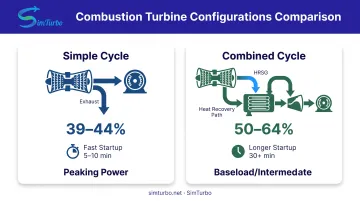
Simple cycle plants use only the gas turbine and generator. They are optimized for rapid startup and peaking power, and achieve 39.7%–44% thermal efficiency depending on the model.
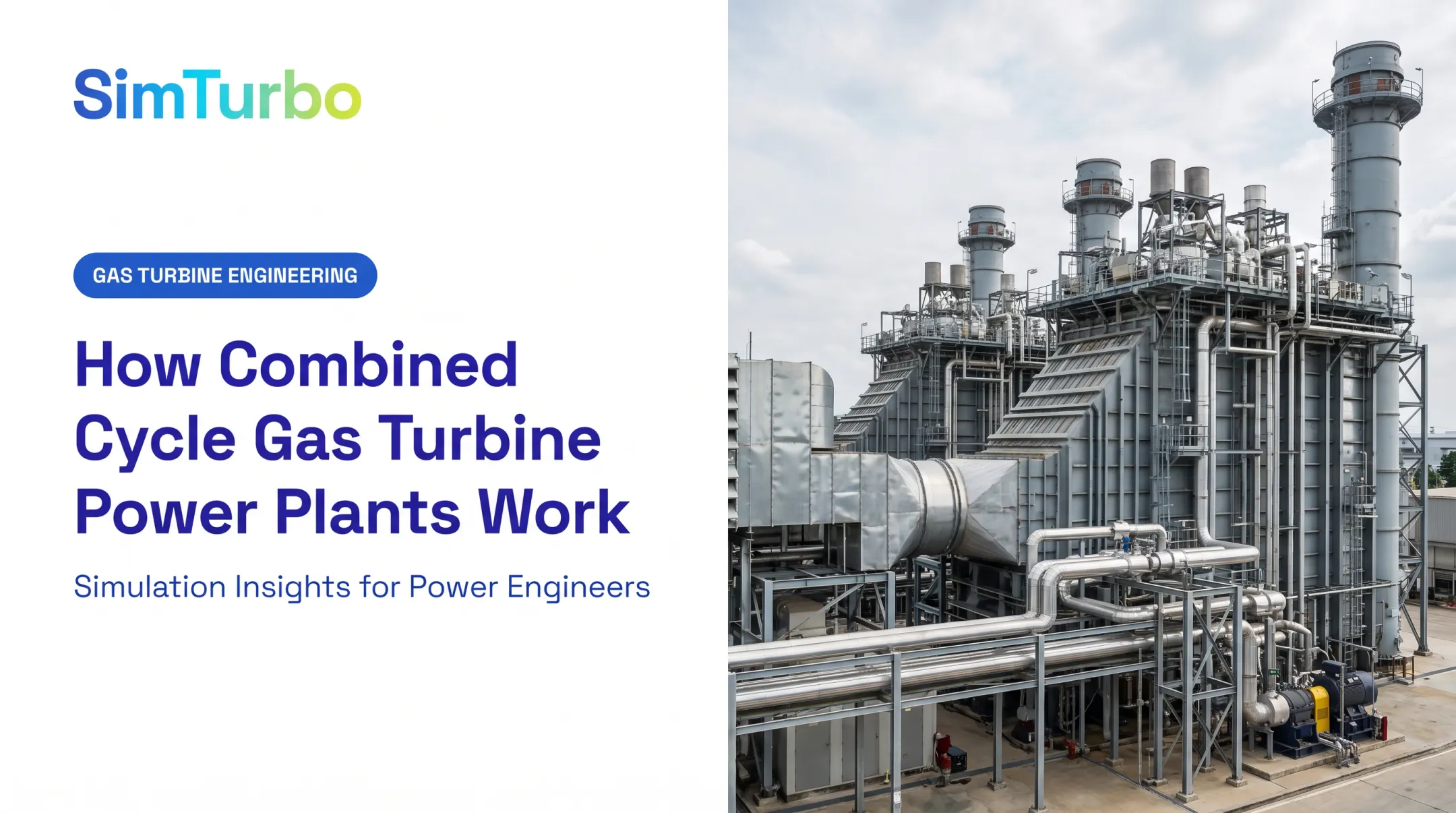
Combined cycle plants add a heat recovery steam generator (HRSG) that captures exhaust heat to power a steam turbine. Modern configurations reach 64% efficiency or higher, making them competitive for intermediate and baseload operation despite longer startup times.
Historical Context
Modern combustion turbine technology evolved from aircraft jet engines. The 1939 Neuchatel unit was the first successful electricity-generating gas turbine in commercial operation, while the 1949 Belle Isle unit pioneered U.S. utility-scale deployment.
Today's market includes aeroderivative units adapted from aviation technology and heavy-duty industrial frames purpose-built for stationary power generation.
How Does a Combustion Turbine Power Plant Work?
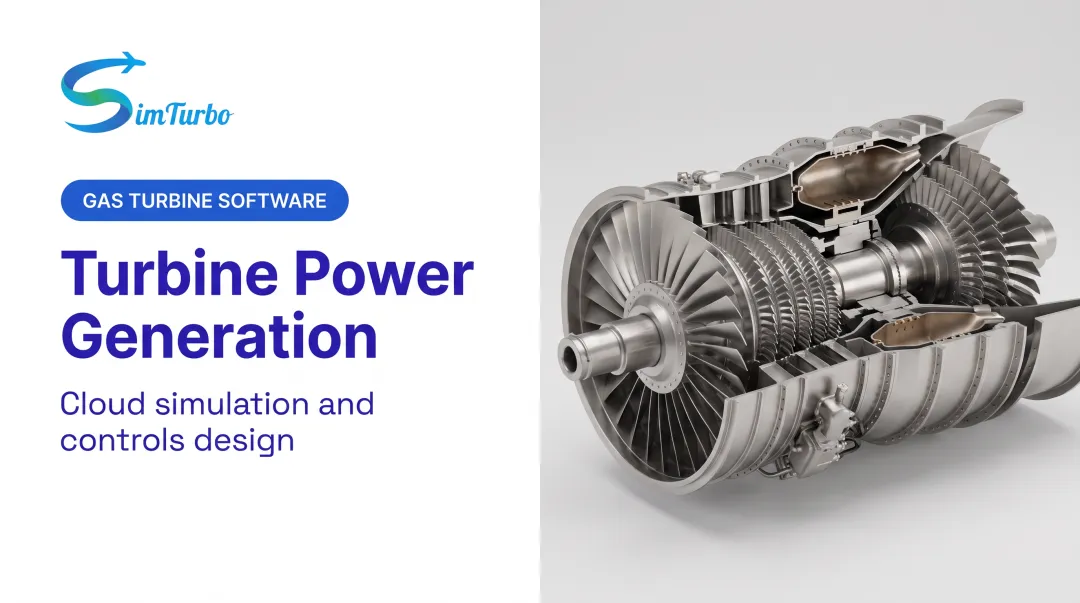
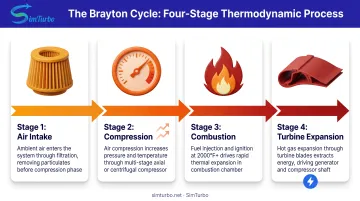
Combustion turbine plants operate on the Brayton thermodynamic cycle: continuously drawing in air, compressing it, injecting and burning fuel, then expanding the hot gases to produce mechanical power.
The Compressor
The compressor pulls ambient air through filtration and drives it through multiple blade stages (axial or centrifugal). Modern units run high compression ratios, so both pressure and temperature rise sharply before combustion.
That work is continuous and energy-intensive:
- Ambient air is filtered, then accelerated stage by stage
- Pressure and temperature climb together ahead of the combustor
- The compressor stays shaft-coupled to the turbine, so both machines stay in sync through the cycle
The Combustor
Compressed air enters combustion chambers where fuel nozzles inject natural gas, diesel, or other fuels. Ignition occurs at temperatures exceeding 2,000°F, but only about 25% of compressed air participates directly in combustion. The remaining 75% provides:
- Flame control and stabilization
- Combustor wall cooling
- Hot gas dilution before turbine entry
- Temperature management to protect downstream components
Many plants now use dry low-NOx (DLN) combustors. Lean premixed fuel-air mixtures cut peak flame temperature and NOx while keeping combustion stable and efficient.
Fuel flexibility is another practical advantage. Units run mainly on natural gas, but many also burn distillate oil or diesel, and modified systems can take hydrogen blends:
- A 2025 utility demonstration reached 50% hydrogen by volume at Georgia Power's Plant McDonough-Atkinson
- Siemens rates the commercial SGT-800 for up to 75% hydrogen
- Dual-fuel setups switch between gas and liquid fuel in operation for supply security
The Turbine Section
Those hot gases then expand through the turbine, moving across stationary guide vanes and rotating blade rows that pull energy from the high-velocity stream. The turbine does two jobs at once:
- First stages: Extract enough power to drive the compressor
- Remaining stages: Drive the electrical generator (simple cycle) or additional power turbine stages (two-shaft designs)
Inlet temperatures in advanced units reach 2,912°F (1,600°C) or higher. Surviving that environment depends on:
- Single-crystal superalloy blade materials
- Thermal barrier coatings
- Internal blade cooling with convective passages and film cooling
- Serpentine cooling channels and shaped cooling holes
With those protections in place, designers can push firing temperature—and with it, thermal efficiency and power output—without sacrificing blade life.
Control and Monitoring
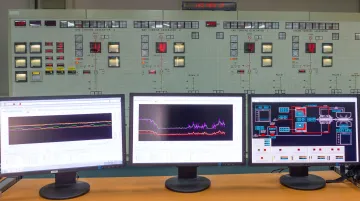
Hardware limits only matter if the plant can hold them. The control system trims fuel flow, compressor inlet guide vanes, turbine speed, and generator output so the unit stays stable, follows load, and never exceeds safe operating limits.
Response speed depends on turbine type:
- Aeroderivative units: 5-minute startup, ~50 MW/min ramp (GE LM6000)
- Heavy-duty frames: 30-minute startup, 40-42 MW/min ramp (Mitsubishi M501J/JAC)
- Advanced frames: 55-75 MW/min ramp rates (GE 7HA series)
Monitoring loops watch turbine inlet and exhaust temperature, vibration, bearing temperature, combustion dynamics, and emissions. That data steers live performance and flags maintenance before a trip.
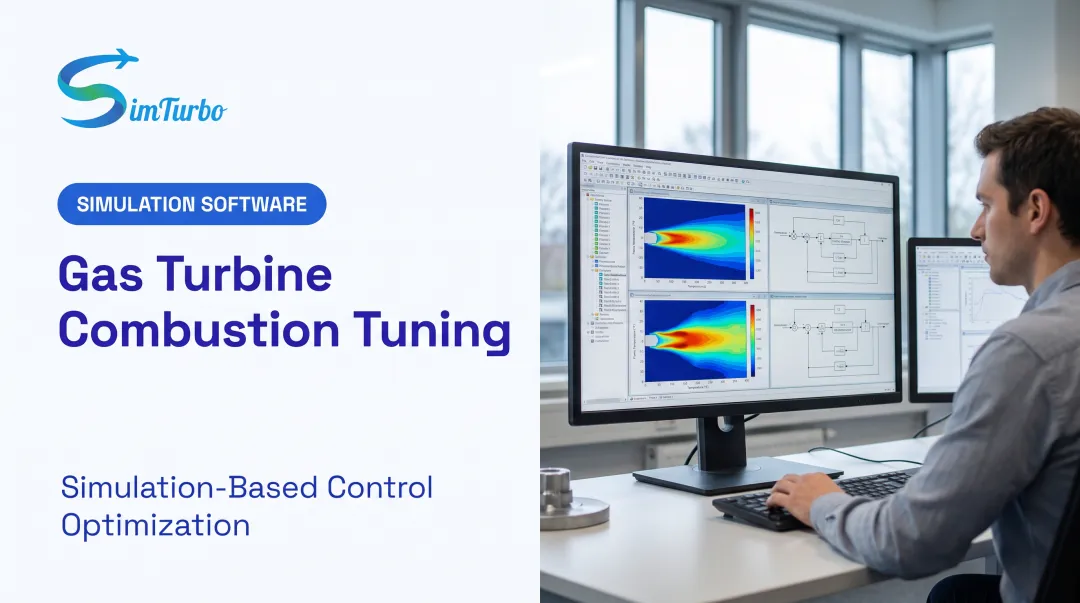
Getting those loops right is hard to do on the unit alone. Engineers who design gas-turbine controls use SimTurbo to simulate PID controllers, fuel scheduling, actuators, and protection logic in real time.
The same models cover startup, throttle steps, load swings, and emergency cases, so control strategies can be proven before they reach the plant.
Where Combustion Turbine Power Plants Are Used
Peaking Power Applications
Utilities deploy simple cycle combustion turbines to meet demand spikes, operating from a few hours per day to several hundred hours annually. Their ability to start in 5-30 minutes and ramp quickly makes them economically viable for periods when wholesale electricity prices justify higher fuel costs.
Renewable Energy Firming and Grid Balancing
As wind and solar generation increases, combustion turbines provide the rapid ramping capability needed to compensate for renewable intermittency. Specifications like 40 MW/min load-following while maintaining emissions compliance (GE 7F) enable these units to maintain grid frequency and voltage stability.
FERC-approved standards require deployment sufficient to recover area control error within 15 minutes after a reportable balancing contingency event, with reserves restored within 90 minutes. Combustion turbines' fast-start and ramping capabilities make them ideal for meeting these grid reliability requirements.
Combined Cycle Baseload and Intermediate Applications
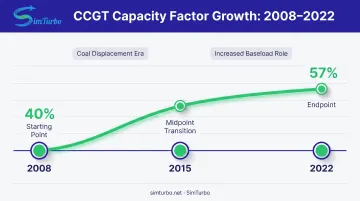
Plants combining gas turbines with heat recovery steam generators operate at 50-64% efficiency for extended periods. The EIA reports CCGT fleet capacity factors rising from 40% in 2008 to 57% in 2022.
That growth reflects a larger role in intermediate and baseload generation: CCGTs compete economically with coal while offering faster startup and greater operating flexibility.
Emerging Applications
- Data centers: Operators increasingly specify on-site combustion turbines for reliable power. GE Vernova and Crusoe announced a 29-unit aeroderivative gas turbine deal to supply AI data centers.
- Industrial CHP: Facilities use turbine exhaust for process steam or heating. DOE reports CHP can reach 65%–75% overall efficiency, versus about 50% for separately supplied heat and power.
For power systems engineers designing aero-derivative installations or comparing cycle configurations, SimTurbo supports component-based modeling of recuperated, regenerated, and intercooled systems. Steady-state analysis helps optimize pressure ratios, estimate power output, and compare fuel use across ambient conditions and operating points.
Conclusion
Combustion turbines convert fuel to electricity through continuous compression, combustion, and expansion in the Brayton cycle. The integrated design—where compressor, combustor, and turbine work as a unified system—enables rapid startup in 5–30 minutes and flexible, high power output from compact installations.
That operating picture helps engineers, utilities, and facility operators weigh generation options with clearer tradeoffs. Fast response and fuel flexibility make these machines essential for peak demand and renewable firming, and they integrate cleanly with modern grids. Combined cycle plants carry the same architecture into intermediate and baseload roles, with thermal efficiencies above 60% and operational flexibility coal and nuclear plants cannot match.
As data centers drive load growth and renewables add grid complexity, that knowledge shapes better plant choices on reliability, heat rate, and cost. For engineers who need to go further, platforms such as SimTurbo support modeling Brayton-cycle performance, startup dynamics, and control response before locking in a configuration.
Frequently Asked Questions
What is a stationary combustion turbine?
A stationary combustion turbine is a gas turbine installed in a power plant or industrial facility for continuous generation. Unlike aeroderivative units adapted from aircraft engines, these machines are built for reliability and long-term operation.
What are the three types of turbines?
Turbines are typically classed as gas (combustion) turbines, steam turbines driven by boilers or heat recovery systems, and hydraulic turbines driven by water. Each type fits different power-generation roles.
What is the difference between simple cycle and combined cycle operation?
Simple cycle uses only the gas turbine and generator, at about 39–44% efficiency. Combined cycle recovers exhaust heat in a heat recovery steam generator to drive a steam turbine, reaching 50–64% or higher efficiency with more complex systems and longer startups.
How quickly can a combustion turbine power plant start?
Aeroderivative turbines can synchronize in 5–10 minutes; industrial heavy-duty frames typically need 10–30 minutes from a cold start. That is far faster than hours for coal or days for nuclear, so they support rapid grid response.
What fuels can combustion turbines burn?
Natural gas is the primary fuel for clean combustion and availability. Many units also burn distillate oils or diesel, and some accept hydrogen blends up to 50–75%; dual-fuel setups add supply flexibility.
How do combustion turbines support renewable energy?
Modern units ramp at 30–75 MW per minute to offset wind and solar swings. They hold grid frequency and voltage during renewable fluctuations and act as spinning reserves that respond within minutes to generation drops or demand spikes.