The Siemens SGT6-5000F is one of the names that keeps coming up. It's a workhorse F-class turbine with decades of runtime behind it and a fast-start capability that fits neatly alongside renewables.
This guide breaks down its specs, real deployments, and cost picture. We'll also touch on how engineers and students can simulate turbine behavior like this before any hardware gets ordered.
Key Takeaways
- 60 Hz F-class SGT6-5000F units are common in U.S. combined-cycle and simple-cycle plants
- 150 MW of non-spinning reserve in 10 minutes supports fast renewable backup
- Project costs vary widely; multi-unit utility orders often reach hundreds of millions
- Xcel Energy ordered 10 Siemens turbines in 2025 to strengthen Texas grid reliability
- Simulation platforms let engineers validate performance before physical deployment
What Is the Siemens SGT6-5000F Gas Turbine?
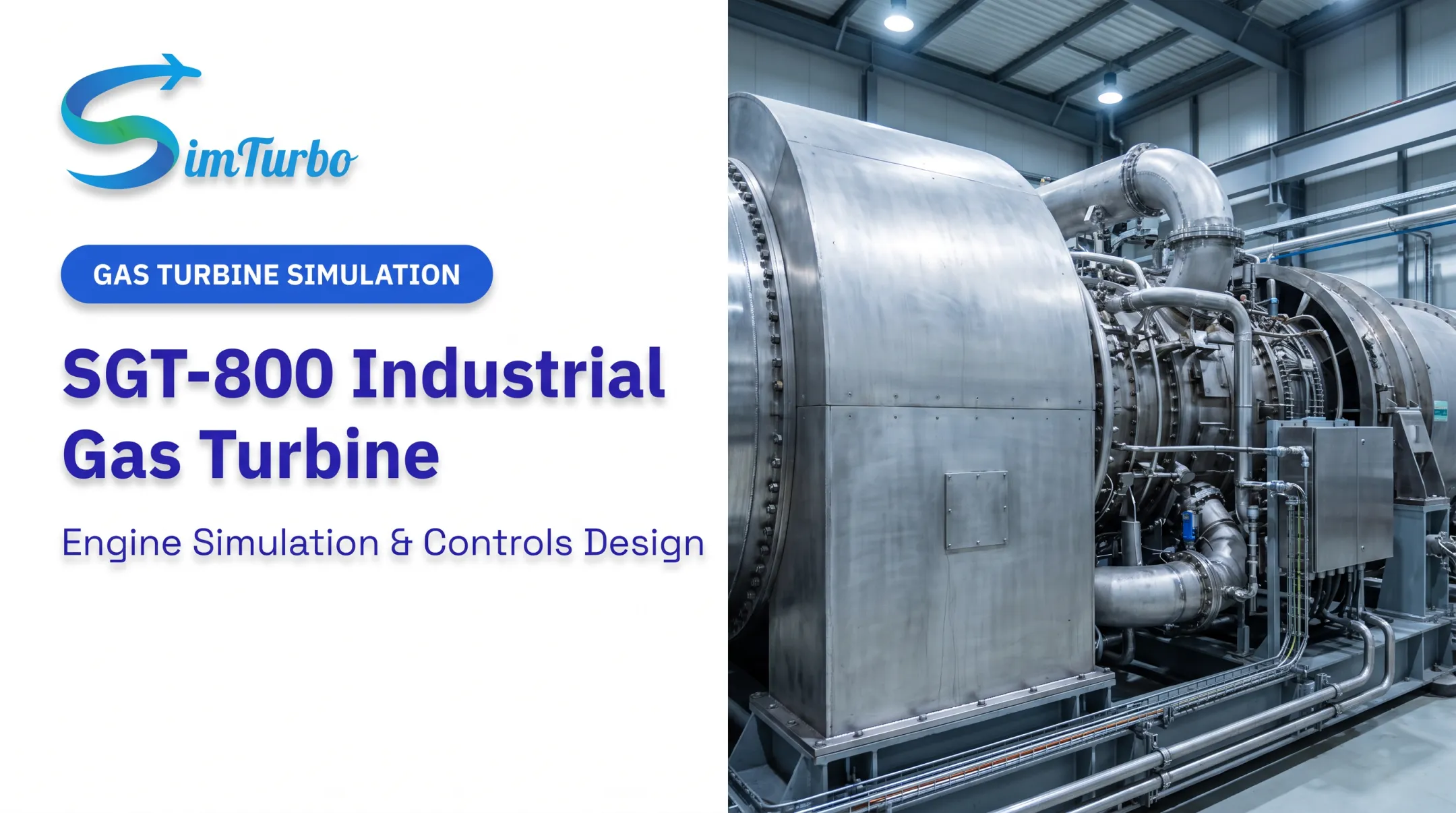
The SGT6-5000F is a 60Hz, F-class heavy-duty gas turbine with roots in Westinghouse's turbine business, later folded into Siemens' portfolio. It's built for utility-scale power generation and runs in both simple-cycle and combined-cycle configurations, handling everything from baseload to fast-ramping peaking duty.
According to a 2025 Power Engineering report, most of the North American F-class fleet Siemens services is this model. Siemens also states the design has sold more than 420 units worldwide, logging over 21 million operating hours with reliability above 99%.
Key Design Features
Three design choices drive that reliability record:
- 13-stage axial compressor with an advanced 3D blade design and variable guide vanes that boost part-load efficiency and transient response
- Single tie-rod rotor using Hirth serrations for torque transmission, a simpler and more robust design than multi-bolt arrangements
- Ultra-low NOx (ULN) combustion system with 16 can-annular combustors and five fuel stages, keeping emissions tightly controlled across load ranges

Together, those features let operators move between peaking, intermediate, and baseload duty on one platform without giving up emissions control or availability.
Technical Specifications and Performance Capabilities
Siemens rates the base SGT6-5000F at up to 260 MW and 40.0% simple-cycle efficiency. Real combined-cycle results differ by site. At El Segundo Energy Center, each Flex-Plant 10 block delivers 275 MW net at the 85°F design point, and the full plant reaches 48.9% combined-cycle efficiency at 550 MW total.
| Metric | Value |
|---|---|
| Base engine output | Up to 260 MW |
| Simple-cycle efficiency | 40.0% |
| El Segundo block output (85°F) | 275 MW net |
| Plant combined-cycle efficiency | 48.9% at 550 MW |
| NOx (Clean Ramp / stack) | 2 ppm |
| NOx / CO (general spec) | <9 ppmvd / <4 ppmvd |
| Combined-cycle ramp rate | 30–35 MW per minute |

Fast-Start Capability
Fast start is a defining SGT6-5000F trait. Each unit can deliver:
- 150 MW of non-spinning reserve within 10 minutes
- Full gas-turbine output in under 15 minutes
- Full plant output (El Segundo) in under 60 minutes
That response window helps cover solar drop-off at sunset and sudden wind shortfalls. The combined-cycle block’s 30–35 MW/min ramp rate lets operators firm renewables without waiting on slower thermal plants.
El Segundo’s Clean Ramp package holds NOx to 2 ppm at the stack during ramps, with virtually no CO in the same window—tighter than the model’s general <9 ppmvd NOx and <4 ppmvd CO sheet values.
Upgrade Paths for Existing Units
Two packages extend installed units:
- Shaping Power — Oversized compressor option that adds about 10% capacity at peak efficiency without raising turbine temperature or shortening part life. Commercial since 2011 after 2007–2010 testing.
- F(X) Advanced Turbine Efficiency Package (ATEP) — Hot-gas-path upgrades Siemens rates at up to 30 MW per unit, typically installed in a 12–24 month window.
Real-World Applications and Recent U.S. Deployments
El Segundo Energy Center, California
NRG Energy's El Segundo facility runs two Siemens Flex-Plant 10 combined-cycle blocks, each built around a single SGT6-5000F. Together they deliver 300 MW of peaking power within 10 minutes. That capability is documented in a California Energy Commission filing reproducing a Gas Turbine World technical write-up.

Xcel Energy's 2025 Purchase
Siemens Energy announced in October 2025 that Xcel Energy purchased 10 large gas turbines for two Texas projects:
| Site | Units | Capacity | Purpose |
|---|---|---|---|
| Tolk Station, Muleshoe | 5 SGT6-5000F | 928 MW | Replacing retiring coal capacity |
| Gaines County | 5 F-class turbines | 1,160 MW | New peaker plant |
Combined, the order totals 2,088 MW, with first turbine deliveries scheduled for early 2026.

Why Upgrades Are Trending
Reuters reported in July 2025 that new gas turbine orders can now face five-plus-year lead times amid a construction surge exceeding 100 GW of announced projects.
An F(X) ATEP upgrade on an already-permitted, already-staffed site typically takes 12–24 months. For utilities under pressure to add capacity fast, upgrading existing SGT6-5000F units is often the more practical path.
How Much Does an SGT6-5000F Gas Turbine Cost?
Siemens doesn't publish a fixed list price. Cost depends heavily on:
- Simple-cycle vs. combined-cycle configuration
- Site conditions and interconnection requirements
- Auxiliary equipment (generators, HRSGs, emissions controls)
Xcel Energy's 10-turbine, 2,088 MW order suggests costs running into the hundreds of millions of dollars for large multi-unit projects, though Siemens hasn't disclosed the contract value.
For an accurate quote, reach out directly to Siemens Energy or an EPC contractor with your specific plant configuration.
If new-unit lead times don't fit your timeline, F(X) ATEP upgrades offer a lower-cost, faster path to additional megawatts on units you already own.
Simulating and Studying Gas Turbine Performance Before Deployment
Before committing to an SGT6-5000F-class purchase or upgrade, engineers need to know how components interact, how the plant responds to transients, and whether control logic holds up under real operating conditions. Getting that wrong on paper is far cheaper than getting it wrong on a commissioned unit.
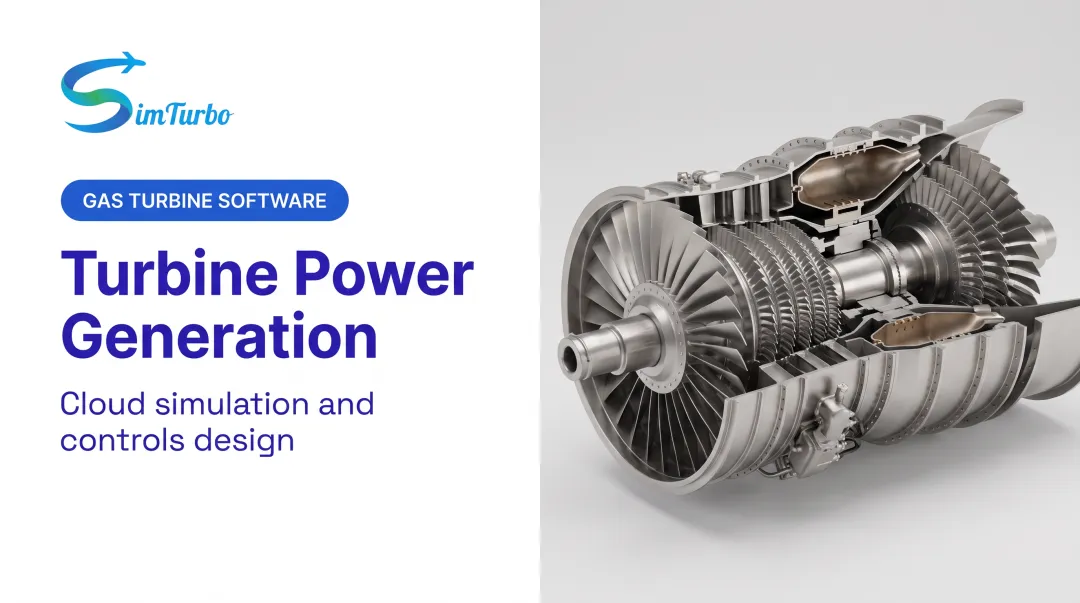
SimTurbo, our Windows-based gas turbine simulation platform, models those interactions with a component-based architecture instead of treating the engine as a black box.
What users can model:
- Compressors and turbines with component maps for performance visualization
- Combustors representing the thermodynamic combustion cycle
- Inlets, nozzles, shafts, and optional components like recuperators
- Control elements including PID controllers, limiters, actuators, and sensors
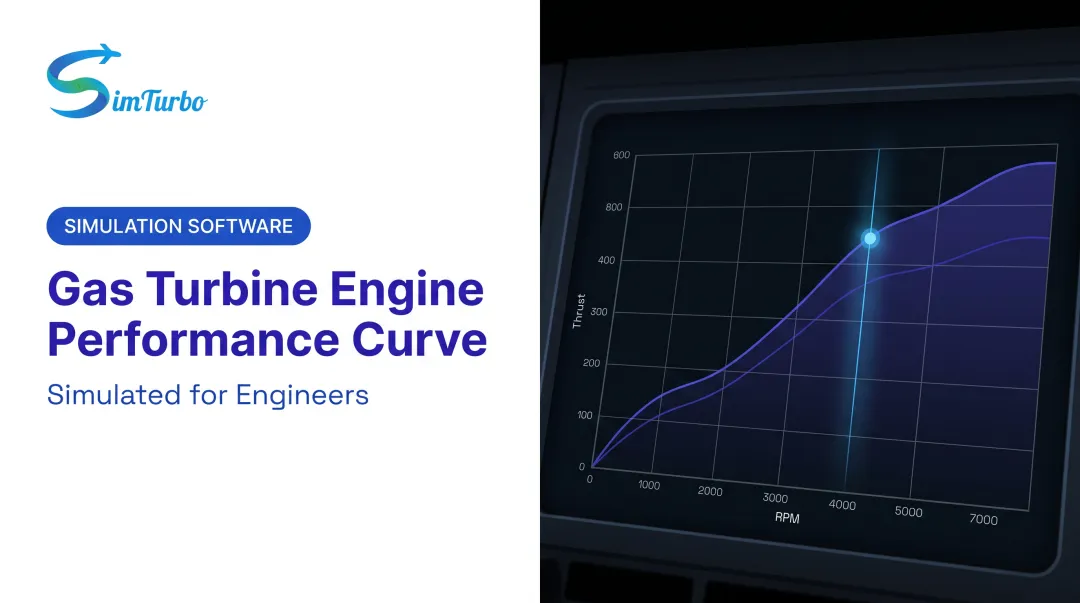
Engineers can simulate startup, shutdown, throttle changes, load changes, and fault conditions in real time, then export transient data (RPM, EGT, thrust, SFC) to CSV or Excel for deeper post-processing in MATLAB/Simulink or Python.

For control validation, SimTurbo exports its built-in PID and FADEC logic as "plant" responses. Control laws developed elsewhere can be tested against a realistic engine model before any hardware is touched.
J85-GE-21 turbojet validation against NASA test data landed within ±2% for thrust, flow rate, temperature, and TSFC, which builds confidence in the underlying physics model.
SimTurbo is used across aerospace, marine, and power-generation engineering, plus university programs studying turbine architectures and control systems. Licensing runs from a 30-day free trial up to a $5,999 lifetime license, with discounted rates available for university classrooms and research labs.
Frequently Asked Questions
What is the Siemens SGT6-5000F gas turbine?
It's a 60Hz F-class heavy-duty gas turbine used in combined-cycle and simple-cycle power plants across the U.S. It's known for reliability and fast-start performance, making it popular for grid stability.
How much does an SGT6-5000F gas turbine cost?
Pricing isn't publicly listed and depends on plant configuration, site conditions, and equipment package. Contact Siemens Energy or an EPC contractor directly for a project-specific quote.
How fast can the SGT6-5000F reach full power?
Each unit can deliver 150MW of non-spinning reserve within 10 minutes and reach full gas-turbine output in under 15 minutes, making it well-suited for renewable backup.
What upgrades are available for existing SGT6-5000F units?
Siemens offers the F(X) ATEP package, which can add up to 30MW per unit through hot gas path upgrades, along with the Shaping Power option for roughly 10% more capacity.
Can engineers simulate SGT6-5000F performance before installation?
Yes. Component-based platforms like SimTurbo let engineers model compressor, combustor, and turbine behavior, validate control logic, and run transient analysis before committing to hardware.