Simulation scenarios exist to close that gap. They let planners, engineers, and trainers test outcomes in a safe, repeatable environment before committing real resources.
This approach shows up everywhere: corporate financial planning, military training, classroom learning, and technical engineering fields like gas turbine design. This article breaks down what simulation scenarios are, the types you'll encounter, a practical planning process, and a real engineering example showing scenarios in action.
Key Takeaways
- Simulation scenarios recreate real or hypothetical conditions so teams can test decisions, systems, or skills without real-world risk
- Run base-case, best-case, and worst-case scenarios (or their technical equivalents) to bound expected performance
- Scenario planning follows five steps, from identifying key drivers through monitoring outcomes after decisions
- Gas turbine teams use component-based platforms to model scenario behavior in real time
What Is a Simulation Scenario?
A simulation scenario is a structured representation of a real or hypothetical situation used to model outcomes, test variables, or practice responses. NASA Glenn Research Center distinguishes a model (the representation of a physical system) from a simulation (the act of exercising that model over time), and that split keeps the system definition separate from the run conditions you are about to test.
A scenario adds the narrative and variable layer on top. A 2023 peer-reviewed review defines scenarios as sets of narratives describing alternative futures, built around contextual uncertainties to raise awareness of plausible outcomes.
Put the two together and you get scenario-based simulation: a defined condition set paired with a dynamic model that reacts as inputs change.
Simulation Scenarios Across Industries
- Corporate finance: Leaders build base-case, best-case, and worst-case financial projections to prepare for market swings.
- Defense training: Exercises recreate combat or crisis conditions so personnel can practice decisions without real-world stakes.
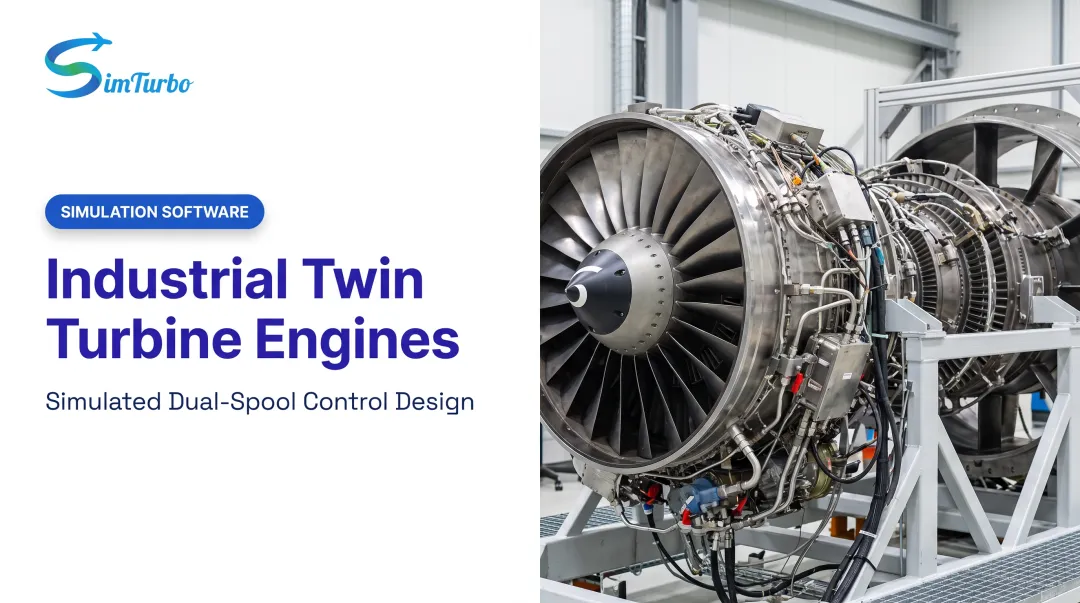
- Engineering: Teams run startup sequences, load swings, and off-design operating points to check transient response and component limits before hardware testing.
The common thread across all three: proactive decision-making instead of reactive scrambling. You find the weak points in a model, not in production.
Types of Simulation Scenarios
Three Core Scenario Types
Most planning frameworks use three core scenario types:
- Base-case: The most likely projection, built from current data and existing plans
- Best-case: An optimistic scenario that shows upside potential
- Worst-case: A stress test that reveals how badly things could go
The Harvard Business Review identifies these three as standard business-planning outputs. There is no universal formula for what makes a scenario "best" or "worst"; you define those assumptions for each study or project.
Technical fields use parallel categories with domain-specific meaning:
- Steady-state scenarios for equilibrium performance (a practical baseline)
- Transient scenarios that model dynamic change over time
- Fault or failure scenarios that stress the system under fault conditions
Scenario Types by Application
| Domain | Scenario Focus | Example |
|---|---|---|
| Strategic/business | Financial and market projections | Revenue forecasting under demand shifts |
| Training/skills | Realistic practice conditions | Crisis-response drills |
| Engineering | System performance under stress | Turbine load transients |

In gas turbine engineering specifically, scenario types often include startup/shutdown sequences, throttle transients, and component or sensor failures. They map directly to real engine behavior engineers need to understand before a physical build.
The Scenario Planning Process: 5 Key Steps
A workable scenario planning process breaks down into five stages, drawing on the operational framework MIT Sloan Review has documented:
- Identify objectives and key drivers — Define what variables matter most, whether that's market conditions, sales volume, or engine load parameters
- Build a base scenario — Use existing plans, historical data, or forecasting logic as your anchor point
- Develop alternative scenarios — Adjust drivers and assign specific responses to each variation
- Run and validate the simulation — Check model behavior against known data or thresholds
- Monitor, update, and integrate — Treat scenarios as living tools, not one-off exercises

Step 4 is about model credibility. NASA-STD-7009A frames it as similarity to the real system, a defined validation domain, and favorable comparison against reference data. There is no single universal accuracy threshold; published examples vary.
NASA's T-MATS toolbox reports differences below 0.5% against reference data, while an ASME peer-reviewed radial-turbine study reported deviations below 3%. Set the tolerance for your specific use case.
Step 5 is where most organizations drop the ball. MIT Sloan Review notes that many teams build scenario models once, use them during a single crisis or project, then abandon them. Scenario planning delivers the most value when it's integrated into ongoing decision cycles, not treated as a one-time checkbox.
Why Simulation Scenarios Matter: Key Benefits
Scenario simulation offers three concrete advantages:
- Faster, more confident decisions: Testing multiple "what-if" paths before committing resources reduces guesswork
- Safer skill development: Teams and engineers learn from mistakes without real-world consequences
- Better preparedness for volatility: Builds readiness for market disruption, crisis events, or unexpected mechanical behavior
A 2023 peer-reviewed review found scenarios help counter tunnel vision and overconfidence by expanding thinking. Subjects using scenarios showed wider confidence ranges in experiments. That's a cognitive benefit, not a guaranteed financial return.
HBR warns that scenarios can fail when shocks fall outside the designer's field of vision. A scenario is only as good as the range of conditions you actually build into it.
RAND's research on Army training devices adds a related insight: psychological fidelity (how real a scenario feels to the participant) matters more for learning transfer than physical fidelity (how expensive and realistic the hardware is). Lower-cost simulation can outperform expensive physical setups if it keeps trainees mentally engaged.
Simulation Scenarios in Engineering: A Gas Turbine Example
Gas turbine engineers rely on scenario-based simulation to understand transient behavior long before metal gets cut. Engines don't just operate at one steady point: they start, accelerate, throttle up and down, and occasionally fail. Each of those events is its own scenario.
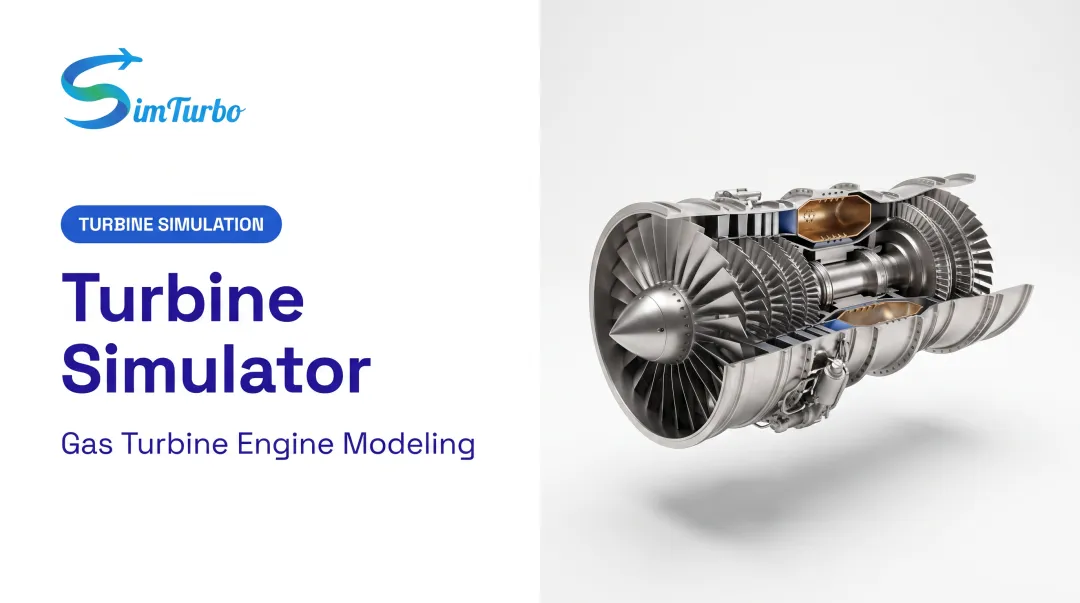
SimTurbo is a component-based, real-time simulation platform built for that work. Engineers architect and re-parameterize individual components—inlets, compressors, combustors, turbines, and nozzles—by dragging, dropping, and connecting them on a design workspace instead of treating the engine as a black box.
Documented scenario types SimTurbo supports include:
- Startup and slam-acceleration sequences
- Compressor stall and surge events
- Sensor-failure scenarios, including resulting FADEC control response
- Throttle movements and load changes, with real-time thermodynamic diagrams
Engineers can watch parameters like RPM, EGT, thrust, and specific fuel consumption update live as conditions change, then export the data as CSV or Excel files for further analysis.

Validation Against Real Test Data
Model credibility depends on comparing simulated output against real-world reference data. NASA Glenn's J85-21 compressor test report is a well-documented public benchmark in the field, capturing detailed compressor performance data from a nine-stage axial compressor test program. SimTurbo references validation against NASA Lewis Research Center J85-GE-21 engine test data, reporting accuracy within ±2%.

Classroom and Capstone Applications
University programs and capstone teams use scenario-based platforms like this to visualize transient effects in real time rather than working purely from static equations. Documented use cases include:
- UAV propulsion and drone turbojet studies
- Hybrid-electric propulsion research
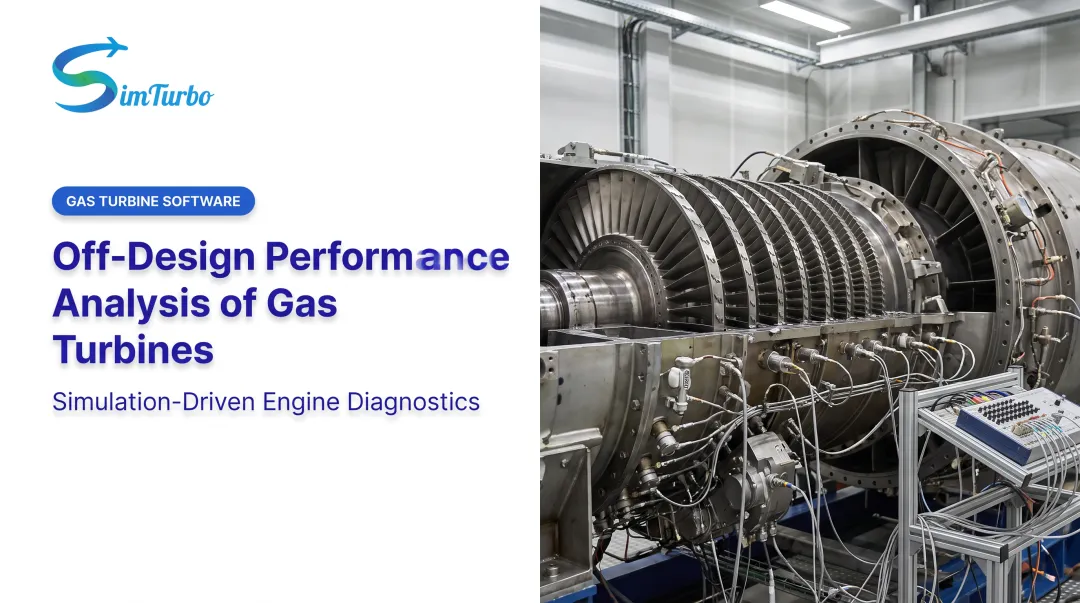
- Off-design studies involving altitude, Mach number, and ambient temperature effects
Students can export "plant" response data to validate control laws built in tools such as MATLAB/Simulink or Python.
Frequently Asked Questions
What is a scenario simulation?
A scenario simulation is a model that recreates a real or hypothetical situation to safely test outcomes, decisions, or system behavior. It combines a defined set of conditions with a dynamic model that responds as those conditions change.
What are the three types of scenarios?
The three common types are base-case (most likely), best-case (optimistic), and worst-case (pessimistic or stress-test). Technical fields often translate these into steady-state, transient, and fault/failure equivalents.
What are the 5 steps of the scenario planning process?
The five steps are: identify drivers and objectives, build a base scenario, develop alternative scenarios, validate the simulation against reference data, and monitor and update continuously.
How is a simulation different from a scenario?
A simulation is detailed system modeling: the exercise of a mathematical or physics-based model. A scenario is the narrative or variable framing layered on top, defining the conditions the simulation runs under.
Who uses simulation scenarios in engineering?
Aerospace, marine, and power-generation engineers use simulation scenarios for design validation, transient analysis, and control testing. University programs and capstone teams also use these tools for propulsion education and research.